
内容简介
一群迈阿密警察在一间废弃的藏身屋发现数百万现钞,彼此之间的信任开始瓦解。随着外部人士得知充公金额如此可观,一切变得疑点重重,到底还剩下什么可以相信?又有谁依然值得信赖?
相关推荐
 ◎5.1▶
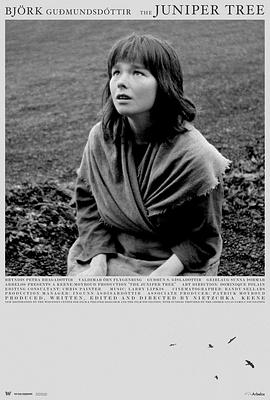
◎5.1▶女巫恋人
美國女導演妮茲卡基恩的《女巫歲月》(1990),則從格林童話取得靈感,在冰島冷酷景致中,以暗黑風格打造心理驚慄故事,冰島天后Björk初登銀幕之作,美得震撼。
 ◎4.4▶
◎4.4▶娜娜2016
入围第66届柏林电影节酷儿单元,获第64届圣塞巴斯蒂安国际电影节(2016)地平线大奖 。小女孩rara生活在一个LGBT家庭,她同时拥有两个母亲,只有13岁的她一直感觉很幸福,直到亲生父亲的试图得到她的抚养权,事情开始发生了变化。
 ◎8.3▶
◎8.3▶顽固分子
杰克(马提亚斯·修奈尔 Matthias Schoenaerts 饰)童年时遭受了极大不幸。因为和好友偷看美丽姑娘,惹上姑娘的哥哥——当地小混混布鲁诺,对方见到他们就要追打欺负,终于有一次下手太狠,用石头生生将小杰克睾丸砸碎。从此杰克的成长都要和注射激素为伴,激素也常常来自黑市。成年后的他成了老练、冷漠的农场工人,擅长养牛,喂牛也用添加激素的饲料,引来稽查员,将他卷入稽查员被杀案件;心怀的旧恨无法平复,终于让杰克走上报仇之路,他重遇事故前偷看过和爱慕着的露西亚(Jeanne Dandoy 饰),找到她如今已经成为植物人的哥哥……
 ◎5.2▶
◎5.2▶神秘夫人
江虹由外国回来,她夜访林川是要了解她姐姐江霞的死因,他怀疑姐姐是被其男朋所林川杀害,经过多次查证,江虹才知道她姐姐是因心脏病而死。在寻找案情蛛丝马迹的过程中江虹也与林川产生了感情,但当疑团化解后,
 ◎8.2▶
◎8.2▶夜色人生
《以夜为生》(Live By Night)根据美国当代著名作家丹尼斯·勒翰(Dennis Lehane)2012年同名小说改编,故事设定在上世纪20、30年代,讲述了一个出身于警察世家的年轻人乔·考夫林(Joe Coughlin)加入黑帮、越陷越深、走上不归路的故事。该书是丹尼斯·勒翰2008年小说《命运之日》(The Given Day)的续篇,共分三部:第一部“波士顿”讲述乔初入黑帮,爱上黑帮老大亚伯·怀特的情妇,结果入狱,成为狱中黑老大马索的心腹;第二部“伊波”讲述乔出狱后,与马索一起扳倒亚伯,在坦帕市自立门户逐渐崛起;第三部“所有暴力的孩子”讲述马索与乔翻脸,双方决战。 据悉,西耶娜·米勒(Sienna Miller)在片中将扮演黑帮老大的情妇艾玛(Emma);佐伊·萨尔达娜(Zoe Saldana)则将饰演乔在坦帕自立门户时遇到的女子格瑞西耶拉·苏亚雷兹(Graciella Suarez);艾尔·范宁(Elle Fanning)饰演一名野心勃勃的女演员洛瑞塔·菲吉斯(Loretta Figgis),不幸惹上了麻烦。
 ◎4.1▶
◎4.1▶处女之死
一把冷冷的男声带来了故事的开始。青春期对里斯本一家的5个豆蔻女儿们来说,是一道迈不过的槛。首先自杀的是最小的女儿赛西利娅(汉娜霍尔 Hanna R. Hall 饰)。她变得脆弱低落,想结束生命,这一切都没有道得明的原因。父母以为,让她去和男孩交往,会改善情况。然而,赛西利娅还是选择了告别人生。 和男孩交往频繁,性情放纵的,是另一个女儿勒克斯(克尔斯滕·邓斯特 Kirsten Dunst 饰)。勒克斯认识花花公子特里普,被和他发生了关系,却最终被特里普抛弃。里斯本父母害怕再次失去女儿,于是失去了理性。他们把四个女儿困在家中,给她们最严密的保护。然而自杀的惨剧就像疫情一样,迅速的扩散。
 ◎7.5▶
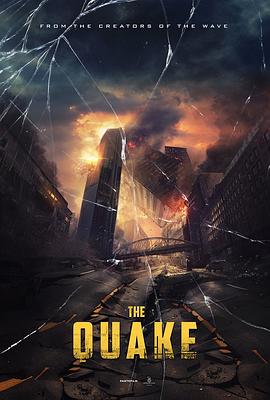
◎7.5▶末日震颤
1904年,5.4级地震突袭挪威首都奥斯陆,造成严重伤亡!多年来,挪威仍不时受细规模地震影响。然而,地质学专家预测,一场难以避免的巨型地震将会再次发生,今次杀伤力更会远超当年。不过,他们却无法准确
 ◎6.3▶
◎6.3▶萨米之血
2016东京电影节影后 评委会大奖获奖影片。讲述一名生活在北欧北部的萨米族小女孩艾拉玛雅的成长故事。 萨米人,亦称拉普人,是生活在北欧北部的一个游牧民族。萨米人拥有自己的的语言(萨米语)及独特的民族音乐(Joik)及传统服饰等等,以饲养驯鹿为生。有相当长一段时间,瑞典挪威等国以强制其接受教育等方式试图同化萨米人,官方甚至禁止在学校和公共场合使用萨米语。(即本片背景)
 ◎4.2▶
◎4.2▶钟馗捉妖记之梦魇传说
孤儿钟馗从小立志成为一名捉妖师,却遭到村民们的耻笑羞辱,不得不放弃梦想。长大后的钟馗自称“捉妖大师”,和忽男忽女的鲛人小鱼、憨憨傻傻的人参精欢喜组成“捉妖小分队”,通过装神弄鬼骗钱谋生。 当三人来
 ◎3.4▶
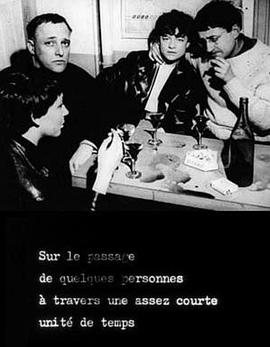
◎3.4▶关于在短时间内的某几个人的经过
Voice 1 (male professional announcer type) This neighborhood(1) was made for the wretched dignity of the petty bourgeoisie, for respectable occupations and intellectual tourism. The sedentary population of the upper floors was sheltered from the influences of the street. This neighborhood has remained the same. It was the strange setting of our story, where a systematic questioning of all the diversions and works of a society, a total critique of its idea of happiness, was expressed in acts. These people also scorned subjective profundity. They were interested in nothing but an adequate and concrete expression of themselves. Voice 2 (Debord, monotone) Human beings are not fully conscious of their real life - usually groping in the dark; overwhelmed by the consequences of their acts; at every moment groups and individuals find themselves confronted with results they have not wished. Voice 1 They said that oblivion was their ruling passion. They wanted to reinvent everything each day; to become the masters and possessors of their own lives. Just as one does not judge a man according to the conception he has of himself, one cannot judge such periods of transition according to their own consciousness; on the contrary, one must explain the consciousness through the contradictions of material life, through the conflict between social conditions and the forces of social production. The progress achieved in the domination of nature was not yet matched by a corresponding liberation of everyday life. Youth passed away among the various controls of resignation. Our camera has captured for you a few aspects of a provisional microsociety. The knowledge of empirical facts remains abstract and superficial as long as it is not concretized by its integration into the whole ” which alone permits the supersession of partial and abstract problems so as to arrive at their concrete essence, and implicitly at their meaning. This group was on the margins of the economy. It tended toward a role of pure consumption, and first of all the free consumption of its time. It thus found itself directly engaged in qualitative variations of everyday life but deprived of any means to intervene in them. The group ranged over a very small area. The same times brought them back to the same places. No one went to bed early. Discussion on the meaning of all this continued... Voice 2 Our life is a journey ” In the winter and the night. ” We seek our passage...� Voice 1 The abandoned literature nevertheless exerted a delaying action on new affective formulations. Voice 2 There was the fatigue and the cold of the morning in this much-traversed labyrinth, like an enigma that we had to resolve. It was a looking-glass reality through which we had to discover the potential richness of reality. On the bank of the river evening began once again; and caresses; and the importance of a world without importance. Just as the eyes have a blurred vision of many things and can see only one clearly, so the will can strive only incompletely toward diverse objects and can completely love only one at a time. Voice 3 (young girl) No one counted on the future. It would never be possible to be together later, or anywhere else. There would never be a greater freedom. Voice 1 The refusal of time and of growing old automatically limited encounters in this narrow, contingent zone, where what was lacking was felt as irreparable. The extreme precariousness of the means of getting by without working was at the root of this impatience which made excesses necessary and breaks definitive. Voice 2 One never really contests an organization of existence without contesting all of that organization's forms of language. Voice 1 When freedom is practiced in a closed circle, it fades into a dream, becomes a mere representation of itself. The ambiance of play is by nature unstable. At any moment ordinary life� can prevail once again. The geographical limitation of play is even more striking than its temporal limitation. Any game takes place within the contours of its spatial domain. Around the neighborhood, around its fleeting and threatened immobility, stretched a half-known city where people met only by chance, losing their way forever. The girls who found their way there, because they were legally under the control of their families until the age of eighteen, were often recaptured by the defenders of that detestable institution. They were generally confined under the guard of those creatures who among all the bad products of a bad society are the most ugly and repugnant nuns. What usually makes documentaries so easy to understand is the arbitrary limitation of their subject matter. They describe the atomization of social functions and the isolation of their products. One can, in contrast, envisage the entire complexity of a moment which is not resolved into a work, a moment whose movement indissolubly contains facts and values and whose meaning does not yet appear. The subject matter of the documentary would then be this confused totality. Voice 2 The era had arrived at a level of knowledge and technical means that made possible, and increasingly necessary, a direct construction of all aspects of a liberated affective and practical existence. The appearance of these superior means of action, still unused because of the delays in the project of liquidating the commodity economy, had already condemned aesthetic activity, whose ambitions and powers were both outdated. The decay of art and of all the values of former mores had formed our sociological background. The ruling class's monopoly over the instruments we needed to control in order to realize the collective art of our time had excluded us from a cultural production officially devoted to illustrating and repeating the past. An art film on this generation can only be a film on its absence of real creations. Everyone unthinkingly followed the paths learned once and for all, to their work and their home, to their predictable future. For them duty had already become a habit, and habit a duty. They did not see the deficiency of their city. They thought the deficiency of their life was natural. We wanted to break out of this conditioning, in quest of another use of the urban landscape, in quest of new passions. The atmosphere of a few places gave us intimations of the future powers of an architecture it would be necessary to create to be the support and framework for less mediocre games. We could expect nothing of anything we had not ourselves altered. The urban environment proclaimed the orders and tastes of the ruling society just as violently as the newspapers. It is man who makes the unity of the world, but man has extended himself everywhere. People can see nothing around them that is not their own image; everything speaks to them of themselves. Their very landscape is alive. There were obstacles everywhere. There was a cohesion in the obstacles of all types. They maintained the coherent reign of poverty. Everything being connected, it was necessary to change everything by a unitary struggle, or nothing. It was necessary to link up with the masses, but we were surrounded by sleep. Voice 3 The dictatorship of the proletariat is a desperate struggle, bloody and bloodless, violent and peaceful, military and economic, educational and administrative, against the forces and traditions of the old world. Voice 1 In this country it is once again the men of order who have rebelled. They have reinforced their power. They have been able to aggravate the grotesqueness of the ruling conditions according to their will. They have embellished their system with the funereal ceremonies of the past. Voice 2 Years, like a single instant prolonged to this point, come to an end. Voice 1 What was directly lived reappears frozen in the distance, fit into the tastes and illusions of an era, carried away with it. Voice 2 The appearance of events that we have not made, that others have made against us, now obliges us to be aware of the passage of time, its results, the transformation of our own desires into events. What differentiates the past from the present is precisely its out-of-reach objectivity; there is no more should-be; being is so consumed that it has ceased to exist. The details are already lost in the dust of time. Who was afraid of life, afraid of the night, afraid of being taken, afraid of being kept Voice 3 What should be abolished continues, and we continue to wear away with it. We are engulfed. We are separated. The years pass and we haven't changed anything. Voice 2 Once again morning in the same streets. Once again the fatigue of so many similarly passed nights. It is a walk that has lasted a long time. Voice 1 Really hard to drink more. Voice 2 Of course one might make a film of it. But even if such a film succeeds in being as fundamentally disconnected and unsatisfying as the reality it deals with, it will never be more than a re-creation ” poor and false like this botched traveling shot. Voice 3 There are now people who pride themselves on being authors of films, as others were authors of novels. They are even more backward than the novelists because they are unaware of the decomposition and exhaustion of individual expression in our time, ignorant of the end of the arts of passivity. They are praised for their sincerity since they dramatize, with more personal depth, the conventions of which their life consists. There is talk of the liberation of the cinema. But what does it matter to us if one more art is liberated through which Tom, Dick or Harry can joyously express their slavish sentiments The only interesting venture is the liberation of everyday life, not only in the perspectives of history but for us and right away. This entails the withering away of alienated forms of communication. The cinema, too, has to be destroyed. Voice 2 In the final analysis, stars are created by the need we have for them, and not by their talent or lack of talent or even by the film industry or advertising. Miserable need, dismal, anonymous life that would like to expand itself to the dimensions of cinema life. The imaginary life on the screen is the product of this real need. The star is the projection of this need. The images of the advertisements during the intermissions are more suited than any others for evoking an intermission of life. To really describe this era it would no doubt be necessary to show many other things. But what would be the point Better to grasp the totality of what has been done and what remains to be done than to add more ruins to the old world of the spectacle and of memories. 1. This film, which evokes the lettrist experiences at the origin of the situationist movement, opens with shots of the Paris district frequented by the lettrists in the early 1950s.
 ◎5.8▶
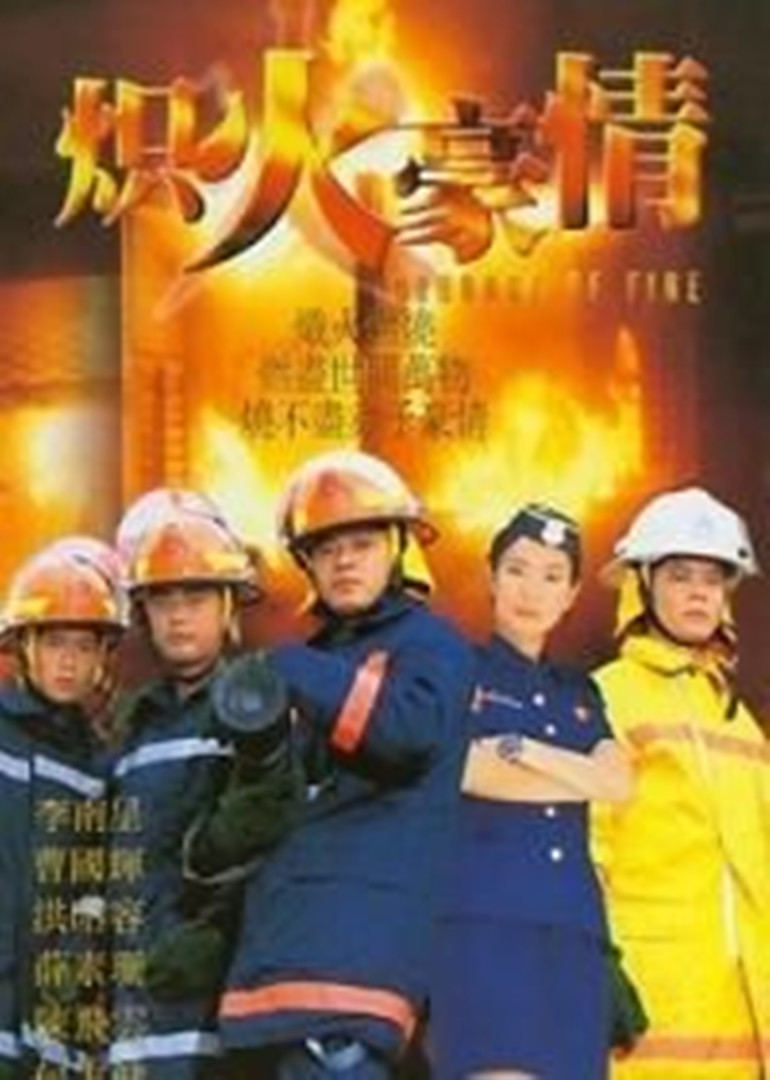
◎5.8▶炽热豪情
消防员彭建兴(李南星饰)因一时疏忽而导致一名杂工被烧死,从此性格变得沉ddd。建兴曾想去自首,可是爱慕虚荣的妻子离他而去,留下儿子让他照顾,建兴只好打消念头,并借工作来麻醉自己。而好友兼同僚汉强(曹国辉饰)对建兴的疯狂工作态度感到担忧,却无法开解建兴。火患调查官依婷(洪昭容饰)在一次调查酒廊失火原因,发现起火原因与建有关,汉强这时才发觉建兴隐瞒案件的真相。
 ◎9.8▶
◎9.8▶渡
沈青怀着孕,压力很大。 她照顾着意外怀孕的学生和患有脑瘫的叔叔,后者有被赶出疗养院的危险。 成本不断增加,时间紧迫,但她和丈夫勉强承受。 当她收到自己的孩子有70%的几率先天残疾的消息时,她的婚姻陷入危机,沈青和她的丈夫为残疾胎儿的命运争论不休,而这个未出生的灵魂却同情地观察着一切。 周洲导演凭借池韵的强势主演和脑瘫患者的参与,讲述了一个女人在一个对残疾人抱有偏见的世界里遵循自己道德的悲痛故事。 ——贾森·马赫(摘自大阪亚洲电影节官网) Qing Chen is carrying a child and a lot of pressure. She is looking after a student who has had an unplanned pregnancy and an uncle with cerebral palsy who is ...