
内容简介
影片由四个短故事组成,丹尼·德维托是个缺乏锻炼的中年男人;艾伦·波斯蒂恩则是个患病的盲老太;朱丽·德尔比饰演一位温和教导的母亲;格蕾塔·葛韦格则戴上眼镜变身宅女。众人对狗狗的态度不同,但共同点是,腊肠狗是他们生活中不可或缺的亲近的朋友。
相关推荐
 ◎8.5▶
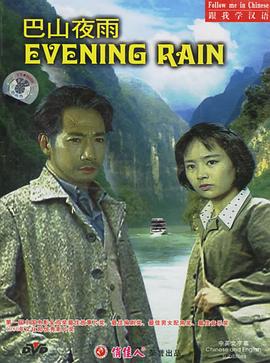
◎8.5▶巴山夜雨
文革后期,一艘由重庆开往武汉的江轮上,几个各怀心事的人共处一室:以莫须有罪名被关押了六年的诗人秋石(李志兴)由专案人员刘文英(张瑜)、李彦(强明)秘密押送,前路凶多吉少;老大娘(欧阳儒秋)的独生子在武斗中丧生,她登船是为凭吊儿子亡灵;农村姑娘杏花被迫“卖身还债”,眼泪汪汪想着心上人……由于刘文英和李彦分别以一副“典型革命小将”和老谋深算的模样示人,两人不得其它人待见。此外,还有一个小女孩趁人不备偷偷溜上了船。 杏花的悲惨遭遇令大伙十分愤慨,可是他们都无计可施,老大娘的坚强也没能将她感染,后来,她跳江准备结束生命,秋石将她救上岸后,讲了自己和柳姑(赵静)的爱情故事,杏花听后重树生活的勇气。已将生死置之度外的秋石没想到的是,他的生命也会再现亮色:乘警老王(仲星火)得到小女孩的信任,小女孩上船原来是为找寻父亲,而通过她所说的找寻的凭证,老王判断出她是秋石的女儿。众人都担心秋石的安危时,良心受到拷问的刘文英决定不计代价向秋石父女伸出援手。
 ◎3▶
◎3▶金榜英雄
朱嘉华(周润发饰)是一个刚从警校毕业的牛奶仔,他到警局后看不惯警界人的一些做法,因此得罪了上司。但他仍保持着一个警员应有的职业准则,最终立下了大功,成为“金榜英雄”。
 ◎8.9▶
◎8.9▶国家养育
在另一个现代社会中,国家将父母从抚养孩子的负担中解放出来,一位执法者了解到一个令人震惊的事实,引发了她的反抗。
 ◎6.6▶
◎6.6▶熊毛
In the film, Baker plays a teen girl named Tori whose social media-centered life causes her debilitating anxiety. When she refuses to go to school, her concerned mother sends her to stay with her grandfather Benoit (Roy Dupuis) in a remote wilderness cabin. Benoit proceeds to refocus her life on survival skills, until a crisis finds Tori quite literally fighting for her life.
 ◎7▶
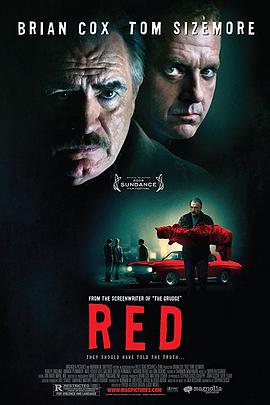
◎7▶雷德怒潮
三个小混混无缘无故杀死一条14岁的名叫red的狗,这条狗是一位曾经参与过朝鲜战争的兽医最好的朋友,处于半退隐状态的他决意奋起反击讨回正义,无论使用合法或非法的手段……
 ◎4.6▶
◎4.6▶阳光普照2019
平凡的一家人阿文(陈以文 饰)和琴姐(柯淑勤 饰)育有两个儿子,叛逆的小儿子阿和(巫建和 饰)与好友菜头(刘冠廷 饰)砍伤人进了少年辅育院,但阿和的女友小玉(吴岱凌 饰)却带着身孕来家里…琴姐不顾阿文反对,将小玉留下来照顾。此时,被砍伤者家属也来找阿文求取巨额赔偿,阿文受不了总是带来麻烦的小儿子,将所有希望都寄托在资优生大儿子阿豪(许光汉 饰)身上,却不知道温暖善良的阿豪心中也藏着不为人知的秘密…
 ◎7.4▶
◎7.4▶欧洲的某个地方
Somewhere in the remote region, the war ends. In the midst of ruined cities and houses in the streets, in rural hamlets, everywhere where people still live, are children who have lost their homes and parents. Abandoned, hungry, and in rags, defenseless and humiliated, they wander through the world. Hunger drives them. Little streams of orphans merge into a river which rushes forward and submerges everything in its path. The children do not know any feeling; they know only the world of their enemies. They fight, steal, struggle for a mouthful of food, and violence is merely a means to get it. A gang led by Cahoun finds a refuge in an abandoned castle and encounters an old composer who has voluntarily retired into solitude from a world of hatred, treason, and crime. How can they find a common ground, how can they become mutual friends The castle becomes their hiding place but possibly it will also be their first home which they may organize and must defend. But even for this, the price will be very high. To this simple story, the journalist, writer, poet, scriptwriter, movie director, and film theoretician Béla Balázs applied many years of experience. He and the director Géza Radványi created a work which opened a new postwar chapter in Hungarian film. Surprisingly, this film has not lost any of its impact over the years, especially on a profound philosophical level. That is to say, it is not merely a movie about war; it is not important in what location and in what period of time it takes place. It is a story outside of time about the joyless fate of children who pay dearly for the cruel war games of adults. At the time it was premiered, the movie was enthusiastically received by the critics. The main roles were taken by streetwise boys of a children's group who created their roles improvisationally in close contact with a few professional actors, and in the children's acting their own fresh experience of war's turmoil appears to be reflected. At the same time, their performance fits admirably into the mosaic of a very complex movie language. Balázs's influence revealed itself, above all, in the introductory sequences an air raid on an amusement park, seen in a montage of dramatic situations evoking the last spasms of war, where, undoubtedly, we discern the influence of classical Soviet cinematography. Shooting, the boy's escape, the locomotive's wheels, the shadows of soldiers with submachine guns, the sound of a whistle—the images are linked together in abrupt sequences in which varying shots and expressive sharp sounds are emphasized. A perfectly planned screenplay avoided all elements of sentimentality, time-worn stereotypes of wronged children, romanticism and cheap simplification. The authors succeeded in bridging the perilous dramatic abyss of the metamorphosis of a children's community. Their telling of the story (the scene of pillaging, the assault on the castle, etc) independently introduced some neorealist elements which, at that time, were being propagated in Italy by De Sica, Rossellini, and other film artists. The rebukes of contemporary critics, who called attention to formalism for its own sake have been forgotten. The masterly art of cameraman Barnabás Hegyi gives vitality to the poetic images. His angle shots of the children, his composition of scenes in the castle interior, are a living document of the times, and underline the atmosphere and the characters of the protagonists. The success of the picture was also enhanced by the musical art of composer Dénes Buday who, in tense situations, inserted the theme of the Marseilaise into the movie's structure, as a motive of community unification, as an expression of friendship and the possibility of understanding. Valahol Europaban is the first significant postwar Hungarian film. It originated in a relaxed atmosphere, replete with joy and euphoria, and it includes these elements in order to demonstrate the strength of humanism, tolerance, and friendship. It represents a general condemnation of war anywhere in the world, in any form.
 ◎4.3▶
◎4.3▶沉寂之桥
Marg Duffield (Lee Remick) is the Maine wife of Al (Joseph Sommer) whose daughter Peg (Marlee Matlin) is deaf. Peg's husband is killed in a car accident on the way to visit the Maine house, and the Duffield's take in Peg's six year old daughter, Lisa, while Peg recovers. Since Lisa is a speaking child, Marg thinks of her the way she wanted Peg to be, and seeks guardian custody. Remick's role is secondary to Matlin's, though she is presented as a tragic figure, particularly as Al refuses to help her plan to gain Lisa. Peg's deafness is said to be from a childhood case of spinal meningitis, and the teleplay by Louisa Burns-Bisogno, with story by Louisa and Tom Bisogno, reduces Remick to a textbook mother who is self-hating from guilt and therefore cannot love her own daughter. In a memorable scene, Peg angrily signs her exit to Marg, since Marg has refused to learn sign language, though Peg has learned to speak for her mother. The treatment uses the Tennesee Williams play, The Glass Menagerie, for therapy, to help Peg overcome her grief and also Marg `lose her unicorn horn' and embrace her daughter. Whilst Peg choosing to act in this play may seem an odd choice for someone grieving, what is more noticable is that Matlin is far too more glamourous to be believable as Laura. The Bisogno's include Michael O'Keefe as Dan, Peg's deceased husband's best friend and director of Actors Theatre for the Deaf, to offer Peg a new romantic interest, and thankfully she rebukes his protestations of love. Although his opinion may be influenced by his `crush', Dan tells Peg that being different is better than being normal, since the normal ones are as `common as weeds'. This philosophy reads as rather Nietzschean, on the level of artists not being restricted to the common moral code. Director Karen Arthur either has those signing also speaking or those signing being translated for the audience, though in one scene the sound of lapping waves drowns out the dialogue between Dan and Peg. She also gives Matlin some good moments, one being her scream of horror when she hears the news of the death of her husband, and another when she chases Remick down a flight of steps, hitting her.
 ◎8.4▶
◎8.4▶爱人你是谁
剧情简介暂缺,敬请期待
 ◎4.4▶
◎4.4▶全员单恋
电影脱胎与演员加藤雅也在广播节目中的构想,他在节目中募集以单恋为题的短篇恋爱小说、漫画,从中精选出8个故事编入电影,并将入选的故事集结成册出版电子小说,此次企划除《全员单恋》这部集合8个恋爱小故事,请到14位人气演员加盟的全员电影外,也拍摄了另外四部单馆系电影作品。电影中诞生了不少新鲜的组合搭档,斋藤工搭档广濑爱丽丝上演《Something Blue》,伊藤沙莉、中川大志的《我的外号叫小猪》名字就十分引人瞩目,在知英出演的《单恋螺旋》一单元中她大胆挑战男装造型水汽吸睛;新川优爱、志尊淳的《说谎之恋》则充满纯爱氛围。
 ◎5.2▶
◎5.2▶拿起枪的简
简(娜塔莉·波特曼 Natalie Portman 饰)和丈夫比尔(诺亚·艾默里奇 Noah Emmerich 饰)生活在蛮荒的西部,日子虽然清贫但也不失幸福。然而,比尔惹到了当地的恶霸约翰(伊万·麦克格雷格 Ewan McGregor 饰),遭到了黑帮史无前例的凶猛报复。为了替丈夫报仇,手无缚鸡之力的简挺身而出。 简找到了自己昔日的情人丹(乔尔·埃哲顿 Joel Edgerton 饰),他是她在这里唯一可以信赖的人了。虽然对于两人曾经的纠葛,丹并未释怀,但丹还是答应了简的请求。除了给简提供必要的庇护外,丹还开始教简使用枪械,希望她能够拥有自我保护的能力,在此过程中,两人旧情复燃。
 ◎3.4▶
◎3.4▶六木道长
世代修习崂山术法的林木森在一次深夜捉妖时伤了元气,在女弟子林灵儿的怂恿下来到北京看病,并顺便看望大弟子林志学。然而已长大成人的林志学对师傅的神鬼之说早已不屑一顾,林木森无意中在林志学小区内发现一只冤鬼,于是暗中将其降服。不料后来林志学所在工地惊现僵尸,在林灵儿擒僵尸失礼的情况下,林木森再度出马降服僵尸。随着林木森的离去,林志学突然在梦中惊醒,原来林木森还尚未到达北京。